How the Global Economy Impacts Your Local Real Estate Market
2 September 2026
Ever wondered why home prices in your neighborhood seem to rise or fall—even when nothing local seems to have changed? Maybe you've driven down your usual route and noticed new "For Sale" signs popping up like mushrooms after rain. Or maybe the opposite: everything has gone quiet, prices have stalled, and open houses are empty. While local factors matter, there's a bigger player behind the curtain: the global economy.
Yep, the global economy is like the weather—omnipresent and wildly influential. And just like a sudden cold front can spoil a sunny day, turbulence on the global financial stage can shake up your local real estate market. Let’s unpack how it all connects, piece by piece.
The Butterfly Effect: How Global Ripples Reach Your Backyard
You’ve probably heard of the Butterfly Effect—how a butterfly flapping its wings in Brazil might theoretically trigger a tornado in Texas. Global economics works in a similar way. A decision by a central bank in Europe, a war across the world, or a factory shutdown in China can have surprising effects on your neighborhood housing prices.Think of the global economy as a vast web. Everything's connected. Capital flows, investor sentiment, supply chains—all of it spills over into real estate. It's not always obvious, but once you understand the channels, you’ll start seeing the signs.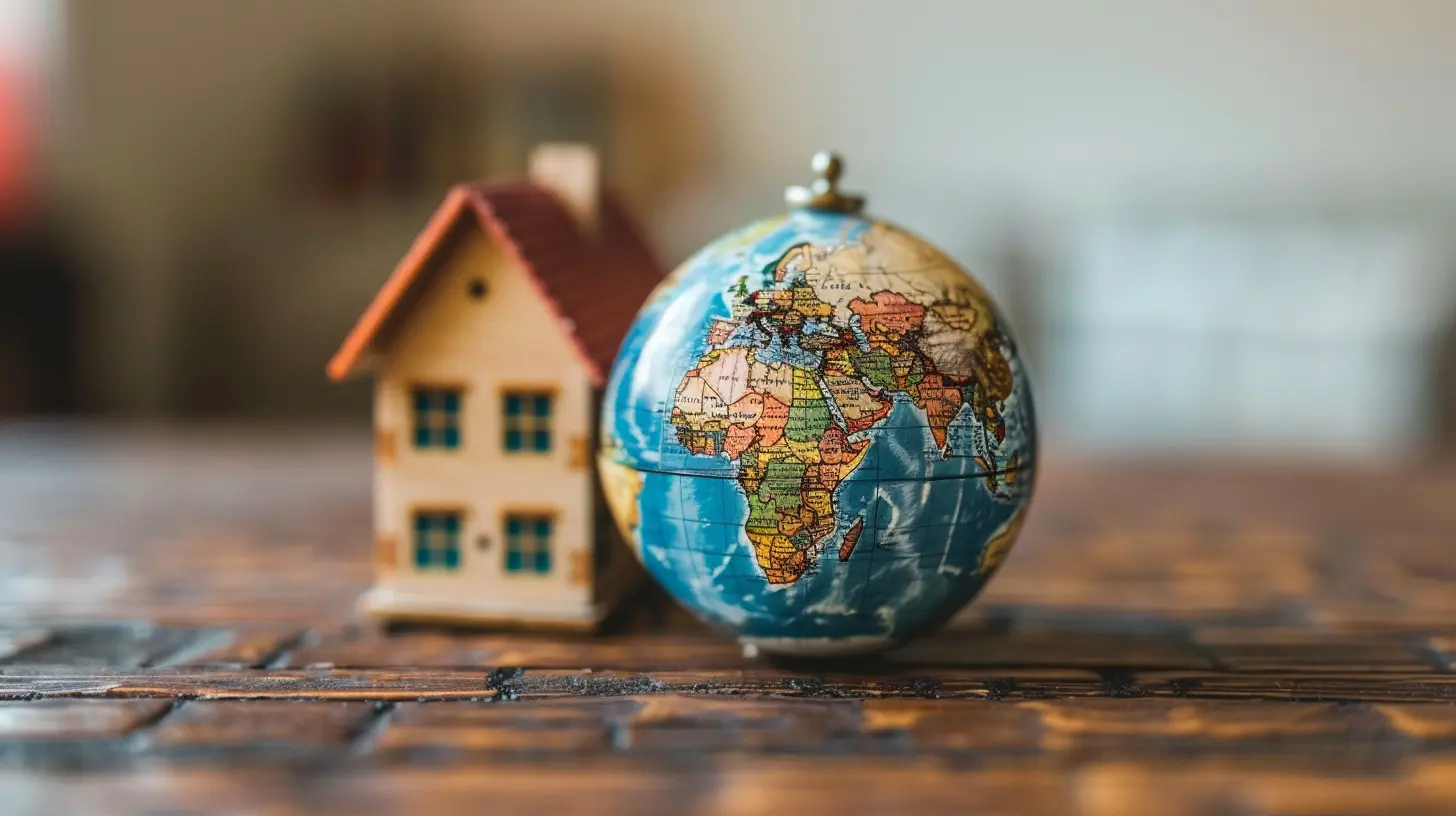
Currency Exchange Rates: The Silent Market Movers
Let’s say you're living in a city with an active international investor scene—places like Miami, Vancouver, London, or Sydney. When the U.S. dollar weakens against foreign currencies, real estate in the U.S. suddenly looks like it’s "on sale" to foreign buyers.For example, if the euro strengthens, European investors might see more bang for their buck in the American market. More demand pushes prices up. Conversely, if the dollar strengthens, foreign buyers might tap the brakes. Supply stays high, demand dips, and prices plateau or fall.
Even if you’re not in a global city, the chain reaction can still touch your town. Investors might be priced out of major metro markets and look to secondary cities. Suddenly, your sleepy suburb is the hot new investment spot.
Interest Rates: The Global Lever That Pulls Local Strings
Global interest rates—especially those set by the Federal Reserve—have a direct and undeniable effect on housing markets everywhere. When the Fed raises rates, borrowing becomes more expensive. That mortgage you were eyeing at 3% might jump to 6%, slashing what you can afford.Rates go up, demand dips, prices weaken.
On the flip side, when global economic fears brew—say, a looming recession or geopolitical unrest—central banks often lower interest rates to stimulate borrowing and spending. Lower rates mean cheaper loans, which often fuel home-buying binges.
So, even if your local economy is booming, high global interest rates could cool down your market. Or a sluggish local economy might get a boost if global central banks ease up. It's all interconnected, like gears in a clock.
Foreign Investment: The Big Money Making Big Moves
Foreign investors love real estate. It's tangible, relatively stable, and offers long-term returns. But when international economies face uncertainty—like China tightening capital controls or Europe facing energy shocks—those investors might slow down or reallocate funds.Look at the flood of Chinese investors into Vancouver and the resulting skyrocketing home prices. Or the post-Brexit buying spree in London as foreign buyers took advantage of currency devaluation. These aren’t just big city tales—they’re signposts for what could be coming to a town near you.
The presence—or absence—of foreign money can dramatically shape local inventory levels, home prices, and even rental rates. And it’s not just residential—commercial real estate feels it too.
Global Supply Chains: Building a House in a Pandemic World
Remember the early days of the COVID-19 pandemic when lumber prices shot up? That had everything to do with global supply chain disruptions. Builders couldn't get materials; projects stalled or got pricey, fast.The supply side of real estate (i.e., new homes, apartments, and commercial properties) is heavily dependent on global trade. Materials like steel, concrete, plumbing components, and even finishings like tiles and windows often come from abroad. If shipping containers are backed up in Asia, your new condo might not be finished on time—or on budget.
And when building slows down, supply tightens. Limited houses mean more competition—and higher prices.
Inflation and Real Estate: A Love-Hate Relationship
Inflation is like that one cousin at family gatherings—constantly showing up and stirring the pot. A global inflationary environment impacts real estate in several ways.First, costs go up. Materials, labor, land—you name it. Builders pass those costs onto you, the buyer or renter.
Second, inflation erodes purchasing power. If your income doesn’t rise with inflation, affording a home gets tougher. This dampens demand, which can cool housing prices.
However (and here’s the twist), real estate is also seen as a hedge against inflation. When inflation spikes, investors often park their money in property to preserve value. If this happens on a large scale, it can drive up local prices—even in the face of declining affordability.
Talk about pushing and pulling in every direction, right?
Economic Crises Abroad: Recession Ripple Effects
When another country faces a financial meltdown—it can echo at home. The 2008 financial crisis, for example, started in the U.S. but had global consequences. Fast forward to today: a debt crisis in China, energy shortages in Europe, or war in Ukraine can all trigger investor panic.Why does that matter for your local real estate market?
Because when global investors lose confidence, they seek what’s known as "safe havens." That might be U.S. real estate, certain cities in Canada, or stable economies like Germany and Australia. These influxes can distort local supply and demand dynamics overnight.
Also, when global markets crash, local banks get nervous too. They may tighten lending conditions, even if your local economy is fine. This makes it harder to get mortgages, lowering demand.
Tech Giants, Remote Work & Global Trends Changing Local Neighborhoods
The rise of remote work—spurred by a global pandemic—reshaped real estate on a global scale. Employees left expensive cities for cheaper, more spacious suburbs. Real estate in places like Boise, Austin, or Charleston saw explosive growth.And this shift was fueled by global tech trends—not just local dynamics.
The same goes for startup culture. If venture capital dries up in Silicon Valley, job losses could ripple out to other cities that provide tech support, customer service, or manufacturing.
Bottom line? Global workforce trends don’t just affect where people work—they affect where they live. And that alters local housing demand.
Migration Patterns Influenced by Global Events
War, climate change, and economic instability push people across borders. Whether it’s Venezuelans fleeing inflation, Ukrainians escaping conflict, or Americans relocating due to wildfires—these movements affect housing demand.Immigration can boost housing demand suddenly and sharply. If infrastructure can't keep up, rents rise, home prices soar, and even homelessness rates can spike.
On the flip side, emigration (people moving out) can depress markets. Think of cities that saw population loss during industrial downturns in the 1970s and 80s—they still carry the scars today.
Local Policy Responses to Global Issues
When local governments see their housing markets spiking due to foreign investments or inflation, they often step in. Think foreign buyer taxes, rent control, or zoning changes. These policies are often reactive to global pressures but deeply affect local markets.For example, Vancouver introduced a foreign buyer tax and an empty home tax to combat speculative buying. New York has been mulling similar measures. These policies aim to stabilize markets but can also discourage investment, reducing new supply.
So while the trigger may be global, the response—and its impact—is very much local.
Final Thoughts: So, What Does It Mean for You?
If you're buying or selling real estate, you can't afford to ignore the global backdrop. Even if it feels distant, its influence is real and immediate.So, what can you do?
- Stay Informed: Follow global economic news, especially central bank decisions and major geopolitical events.
- Work with Experts: Real estate agents with macroeconomic savvy can help you interpret trends.
- Plan Flexibly: Be prepared to pivot based on interest rates, inflation, or investment flows.
- Watch for Trends: Migration patterns, remote work trends, and global investment shifts can be your early warning system.
Real estate isn’t just about location anymore. It’s about timing—and timing is tied to the pulse of the world economy. Keep your eyes wide open and your ear to the global ground because that’s how you turn uncertainty into opportunity.
all images in this post were generated using AI tools
Category:
Real Estate MarketAuthor:

Eric McGuffey
Discussion
rate this article
2 comments
Sabrina McAllister
Global trends shape local markets; stay informed to make smart real estate decisions.
September 7, 2026 at 4:31 AM
Shiloh Turner
This article highlights an important connection. Understanding global trends can really help us navigate our local real estate decisions with more confidence.
September 2, 2026 at 10:43 AM
Eric McGuffey
Thanks for your insight! It's crucial to recognize those connections between global trends and local decisions in real estate. Glad you found it helpful!