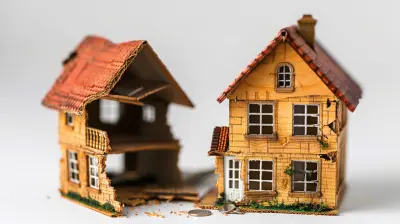
The Role of Interest Rates in Housing Market Fluctuations
10 September 2026
Let’s talk about something that touches nearly everyone’s life—housing. Whether you're looking to buy your first home, considering selling, or simply watching the real estate drama unfold from the sidelines, there's one silent player pulling strings behind the curtain: interest rates.
You might not feel it right away, but interest rates have this sneaky way of steering the housing market like a ship’s rudder controls the direction of a massive vessel. When they rise, things tend to cool off. When they drop, buyers start swarming open houses again.
But why does this happen? How exactly do these little numbers set by banks and central banks ripple through the housing world with such force?
Grab your coffee—we’re about to dive into the fascinating (and sometimes frustrating) role of interest rates in housing market fluctuations.
What Exactly Are Interest Rates, Anyway?
Before we connect the dots, let’s take a quick refresher.Interest rates are basically the "cost of borrowing" money. When you take out a loan—whether for a car, a business, or a house—you’re paying the lender a little extra on top of what you borrowed. That "extra" is the interest.
Now, in the housing world, we’re usually talking about mortgage interest rates. These are the rates you’re charged when borrowing money to buy a home. They're influenced by a whole host of things, but primarily by the central bank (like the Federal Reserve in the U.S.) and the overall economy’s health.
How Interest Rates Influence Affordability
Here's the straight-up truth: lower interest rates make buying a home more affordable. When rates are low, your monthly mortgage payments shrink. That means buyers can afford more expensive homes—or just feel more comfortable jumping into the market.Let me give you a simple example.
- Say you borrow $300,000 for a new home.
- At a 3% interest rate, your monthly payment might be around $1,265.
- But if the rate jumps to 6%, you’re suddenly paying $1,799 a month.
That’s over $500 more every month for the exact same house. Ouch, right?
So when interest rates rise, many potential buyers tap the brakes or drop out entirely. This cools demand, which can eventually bring down home prices—or at least slow down how fast they're rising.
The Domino Effect of Rising Rates
Interest rates don't just affect buyers. There's a ripple effect that touches sellers, renters, real estate agents, builders, and even your neighbor who's thinking of refinancing.1. Homebuyers Step Back
As borrowing becomes more expensive, fewer people are willing or able to buy homes. That reduces demand.2. Sellers Face Pressure
With fewer buyers in the pool, sellers may have to lower their asking prices or offer incentives to attract offers. Some might even pull their listings and wait for better times.3. Builders Slow Down
Home builders watch interest rates like hawks. If mortgage rates are high, they may delay new developments because they know fewer people will be in the market to buy.4. Renters Feel It Too
It might seem strange, but renters can get hit too. When buying becomes unaffordable due to higher rates, more people stay in rentals, which drives demand—and potentially rent prices—up.
What Happens When Rates Drop?
On the flip side, when interest rates fall, it’s like Black Friday for homebuyers. Mortgages get cheaper, people get excited, and the market heats up. Suddenly, buyers are lining up, bidding wars break out, and prices can surge.This is often when we see housing bubbles forming—those fast-moving markets where homes sell above asking price and sellers barely have to lift a finger. It's great… until it's not.
Because when interest rates inevitably climb again, those inflated prices can come crashing down. People who bought at peak prices may find themselves “underwater,” owing more on their mortgage than their home is worth. It's heartbreaking and financially devastating.
Historical Patterns: The Interest Rate and Housing Dance
If we take a trip down memory lane, history gives us some insights.- Early 1980s: The Federal Reserve hiked interest rates dramatically to fight inflation. Mortgage rates soared above 18%. As you'd expect, the housing market tanked.
- Early 2000s: Interest rates were kept low, making borrowing cheap. People gobbled up homes, and the housing bubble expanded… until 2008, when the market crashed in spectacular fashion.
- 2020-2021: In response to the pandemic, interest rates were slashed to record lows. This fueled a housing boom, as people rushed to secure low mortgage rates while working remotely and reassessing their living situations.
- 2022-2023: As inflation became a major concern, central banks began rapidly increasing interest rates. The housing market cooled quickly, prices in some areas flatlined, and buyer competition faded.
The takeaway? There’s a clear correlation. Interest rates rise, the housing market chills. Interest rates fall, the market heats up.
The Emotional Side of Interest Rates
Let’s shift gears for a second and talk about something people rarely touch on—how interest rates feel.Buying a home isn’t just a financial decision. It’s deeply emotional. That dream home—the one with the backyard for your kids, or the cozy kitchen you imagined baking in—it becomes a symbol of your future. When high interest rates put that dream out of reach, it’s more than just numbers. It’s disappointment. It’s stress. It’s the feeling of being stuck.
On the flip side, when rates drop, people feel hopeful. Opportunities open up. That feeling of “maybe this is the year we buy our home” becomes a real possibility.
So yeah, interest rates may seem like boring financial metrics… but they echo through the emotional landscape of our lives in real and profound ways.
How to Navigate the Housing Market, No Matter the Rates
If you're feeling overwhelmed by all of this, you're not alone. Many people are just trying to figure out whether to buy now, wait, refinance, or sell.Here’s a bit of friendly advice, from one regular person to another:
1. Focus on What You Can Control
You can’t change interest rates or predict the future, but you can control your budget, your credit score, and your timeline. Work on those things, and you give yourself options—no matter what the rates do.2. Buy When It’s Right for You
Forget trying to “time the market.” Some of the best home purchases happen during high-rate periods simply because the time was right for that individual or family. If it makes sense for your life, that’s what matters most.3. Consider Adjustable Rate Mortgages (ARMs)—Carefully
In some cases, ARMs can offer lower initial rates, which helps if you’re not planning to stay long-term. But be cautious—they come with risks if rates continue climbing when the fixed-rate period ends.4. Talk to a Trusted Professional
Seriously, don’t go it alone. A good real estate agent or mortgage adviser can help you make sense of everything, explain your options, and help you avoid costly mistakes.A Bigger Picture: Interest Rates and the Economy
Here’s something worth remembering: interest rates don’t operate in a vacuum. They’re tools used by central banks to manage the economy.When inflation is rising too fast, interest rates go up to cool things down. When the economy is sluggish, rates drop to encourage spending and investment.
So if you're wondering why rates are rising now, it’s probably because inflation's on the rise or the economy is recovering. If they’re falling, the opposite might be true.
That’s why the housing market is such a strong economic indicator. It reflects not only consumer confidence, but also the broader direction of the economy.
The Bottom Line
Interest rates might seem like just a number on a chart, but they shape our real-world experiences in powerful ways. They influence who can buy, who can sell, where prices go, and even how we feel about our financial future.The housing market will always fluctuate—rising and falling like the tide—but understanding the role of interest rates can help you make smarter, more confident decisions.
So whether you're buying your first home, investing, or just trying to stay informed, remember this: a little knowledge goes a long way. And in the sometimes dizzying world of real estate and finance, that knowledge is your compass.
all images in this post were generated using AI tools
Category:
Real Estate MarketAuthor:

Eric McGuffey
Discussion
rate this article
2 comments
Carla McAnally
Great insights on interest rates and their impact on the housing market dynamics.
September 29, 2026 at 10:22 AM
Isabelle Bass
Interest rates are more than just numbers; they shape the dreams of homeownership and influence entire communities. A small shift can either unlock doors or tighten them, revealing the fragile balance of our economic landscape.
September 26, 2026 at 4:52 AM